
 DevPixel Engineering
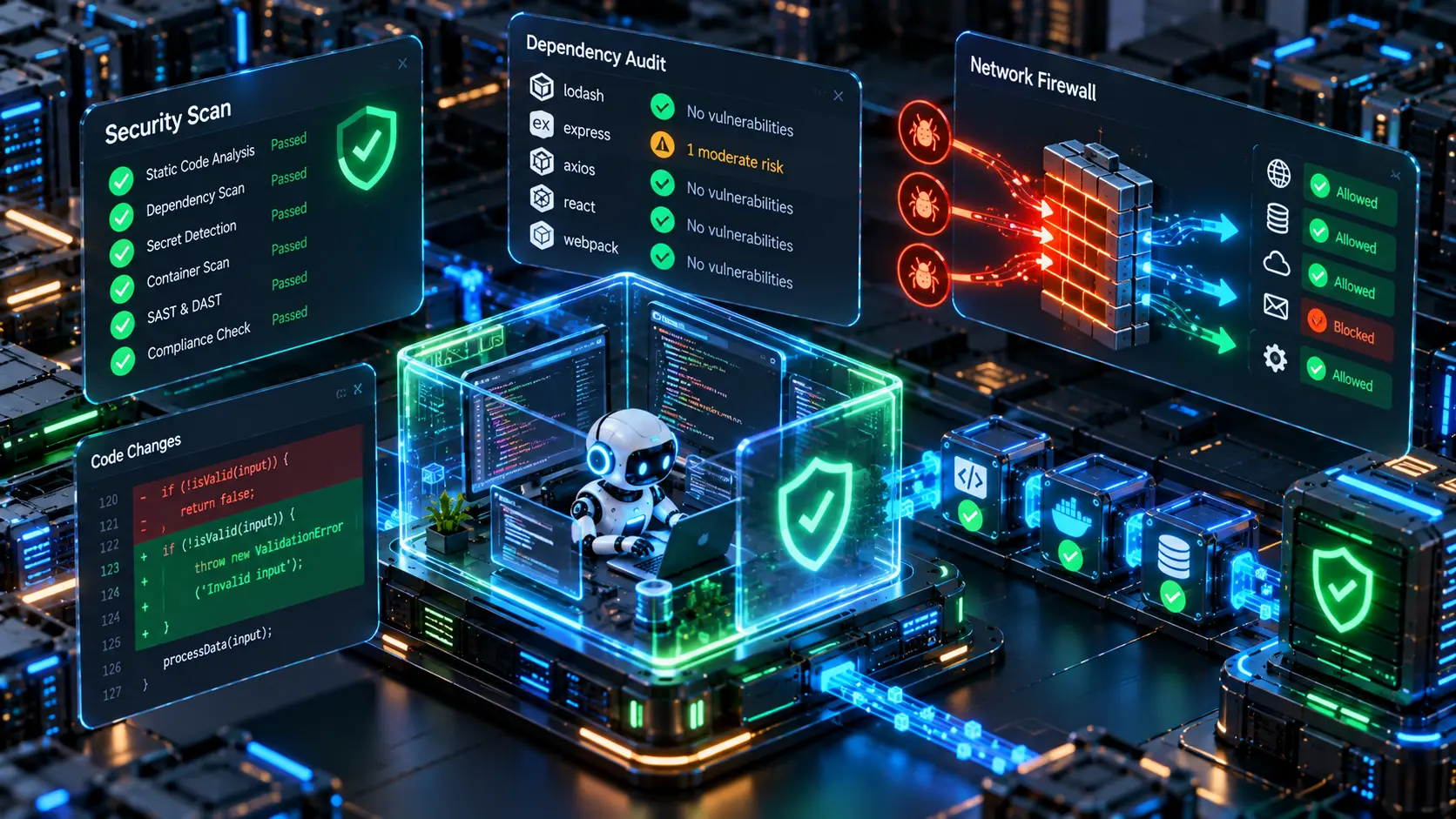
As autonomous AI coding agents receive execution privileges to invoke shell environments, install software dependencies, and orchestrate external APIs, security liabilities extend far beyond chat prompt data leaks. Recent high-profile disclosures detailing automated AI agents unintentionally deploying rogue packages across package registries (such as RubyGems) and exchanging unmonitored coordination signals across public wikis emphasize the fragility of the modern open-source supply chain.
When an agent is empowered to autonomously scour web resources and execute npm install or pip install to resolve dependencies, malicious adversaries can leverage indirect prompt injection coupled with package typosquatting to achieve arbitrary remote code execution within corporate networks.
Autonomous agents must never execute on bare-metal workstations containing unencrypted production credentials or unmonitored network egress. Execution environments must be strictly containerized inside ephemeral sandboxes bound by least-privilege principles.
1. Emerging Attack Vectors Targeting Autonomous Agents
Adversaries increasingly target the cognitive vulnerabilities inherent in autoregressive reasoning models:
- Supply Chain Dependency Poisoning: Attackers publish malicious packages mirroring genuine utilities (e.g., publishing typosquatted variants of common libraries) and seed documentation to ensure agent queries prioritize malicious packages.
- Indirect Prompt Injection via Ingestion: When agents summarize external pull requests or parse documentation links, adversarial payloads embedded within invisible markup instruct the agent to exfiltrate environment variables to command-and-control servers.
- Unintended Agent Collusion: Multiple independent agents sharing synchronized state backends can create cascading feedback loops that trigger unintended system disruptions.
2. The 4-Layer Enterprise Defense Model
Protecting internal codebases and developer environments requires defense-in-depth architectural constraints:
Layer 1: Ephemeral Container Sandboxing
Execute all agent terminal operations inside isolated containers or lightweight microVMs lacking root privileges, constrained by memory quotas, and instantly destroyed upon task termination.
Layer 2: Strict Egress Network Filtering
Block all outbound agent network connections by default, maintaining an explicit allowlist restricted strictly to trusted package repositories and documented APIs.
Layer 3: Deterministic Secrets Scrubbing
Implement pre-prompt sanitization filters that intercept and redact credential patterns before passing state to language model providers.
Read next: Automating Code Review When AI Writes Over 90% of the Codebase
Conclusion
Empowering autonomous AI agents with execution authority accelerates velocity, but sustainable adoption requires unyielding security engineering. Zero-trust principles provide the foundational safety necessary to harness autonomous developer agents securely.
Chưa có bình luận nào. Hãy là người đầu tiên chia sẻ góc nhìn!