
 DevPixel Engineering
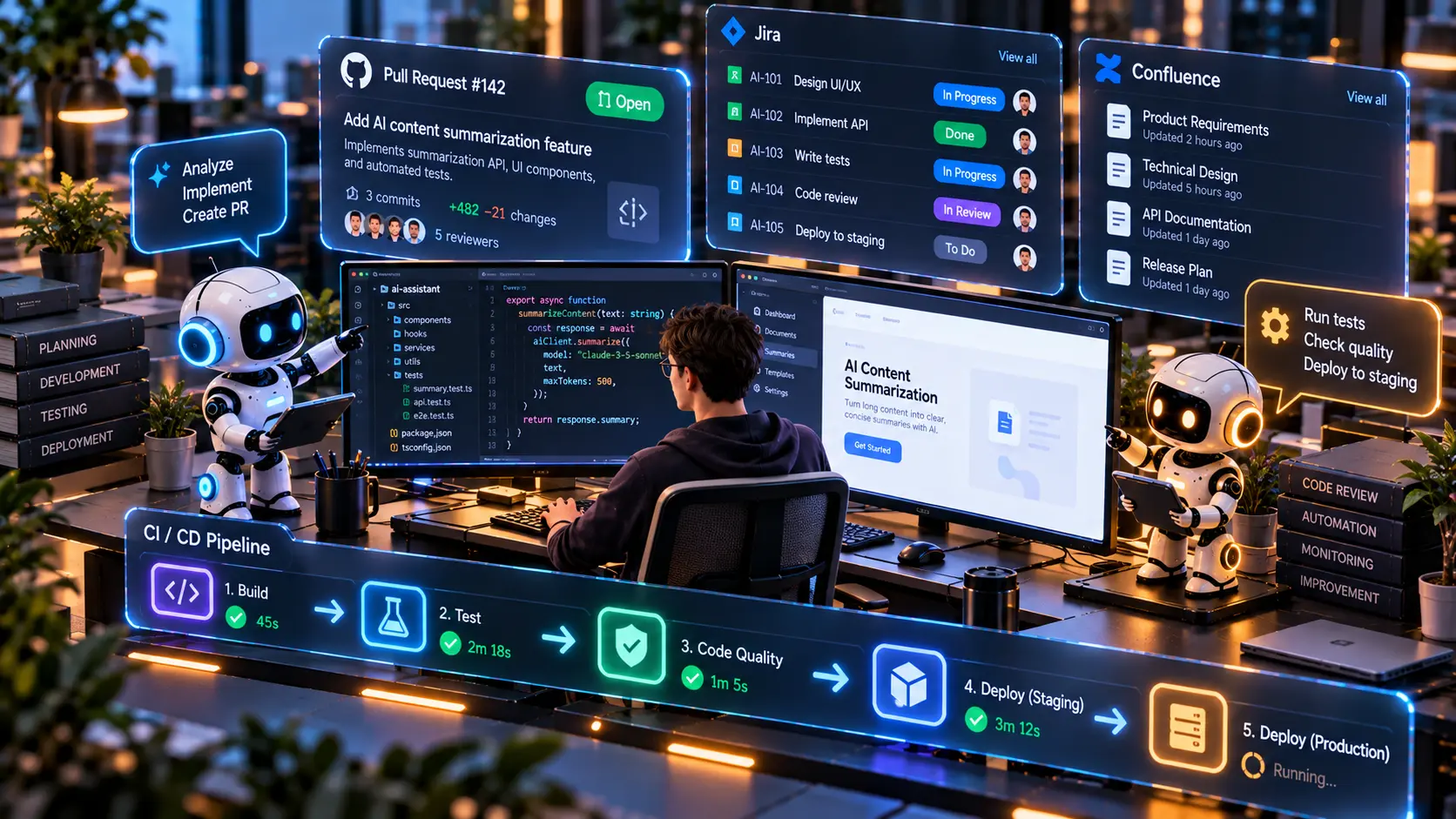
Within Anthropic’s landmark IPO regulatory disclosures, founder Dario Amodei placed a transformative strategic construct at the center of future product positioning: Virtual Collaborators. Anthropic explicitly signaled a departure from legacy nomenclature like “assistants” or “copilots,” defining a distinct generation of autonomous AI systems capable of executing multi-day and multi-week workflows alongside human professionals.
Most notably, the filing disclosed that over 90% of September codebase contributions at Anthropic were authored directly by Claude — proving that virtual collaboration has already transitioned from academic theory into production operational reality.
Virtual Collaborators represent autonomous AI systems carrying explicit identity permissions (IAM), deep connections to internal operational tooling, persistent project memory, and sustained reasoning capabilities across complex multi-step organizational workflows.
1. The 3 Distinctions Between Copilots and Virtual Collaborators
The virtual collaborator taxonomy reflects an architectural maturation across enterprise systems:
- Explicit IAM Scoped Identities: Rather than executing within anonymous chat sandboxes, virtual collaborators possess dedicated enterprise credentials bounded by fine-grained permissions across Git, ticketing systems, and data warehouses.
- Persistent State and Longitudinal Context: Context persists across continuous execution cycles; systems track project milestones, document architectural decisions, and maintain comprehensive audit logs.
- Closed-Loop Operational Execution: Rather than merely recommending diffs, virtual collaborators author code, orchestrate test runs, observe telemetry metrics, and iteratively refactor until validation thresholds are satisfied.
2. Preparing Enterprise Infrastructure for Virtual Collaborators
Integrating autonomous collaborators requires foundational infrastructure engineering:
- Standardize Interfaces via Model Context Protocol (MCP): Deploy hardened MCP servers exposing internal services and databases under structured schemas.
- Enforce Least-Privilege Guardrails: Constrain collaborators to non-destructive scopes (e.g., feature branch permissions only, requiring human sign-off on production deployments).
- Implement Deterministic Budget Controls: Enforce circuit breakers such as Hard Budget Caps to guard against runaway token consumption across parallel collaborator instances.
Read next: Automating Code Review When AI Writes Over 90% of the Codebase
Conclusion
The era of conversational copilot widgets is transitioning toward autonomous Virtual Collaborators. Organizations that architect robust IAM boundaries and MCP integrations today will deploy scalable digital engineering teams capable of unprecedented output.
Chưa có bình luận nào. Hãy là người đầu tiên chia sẻ góc nhìn!