
 DevPixel Engineering
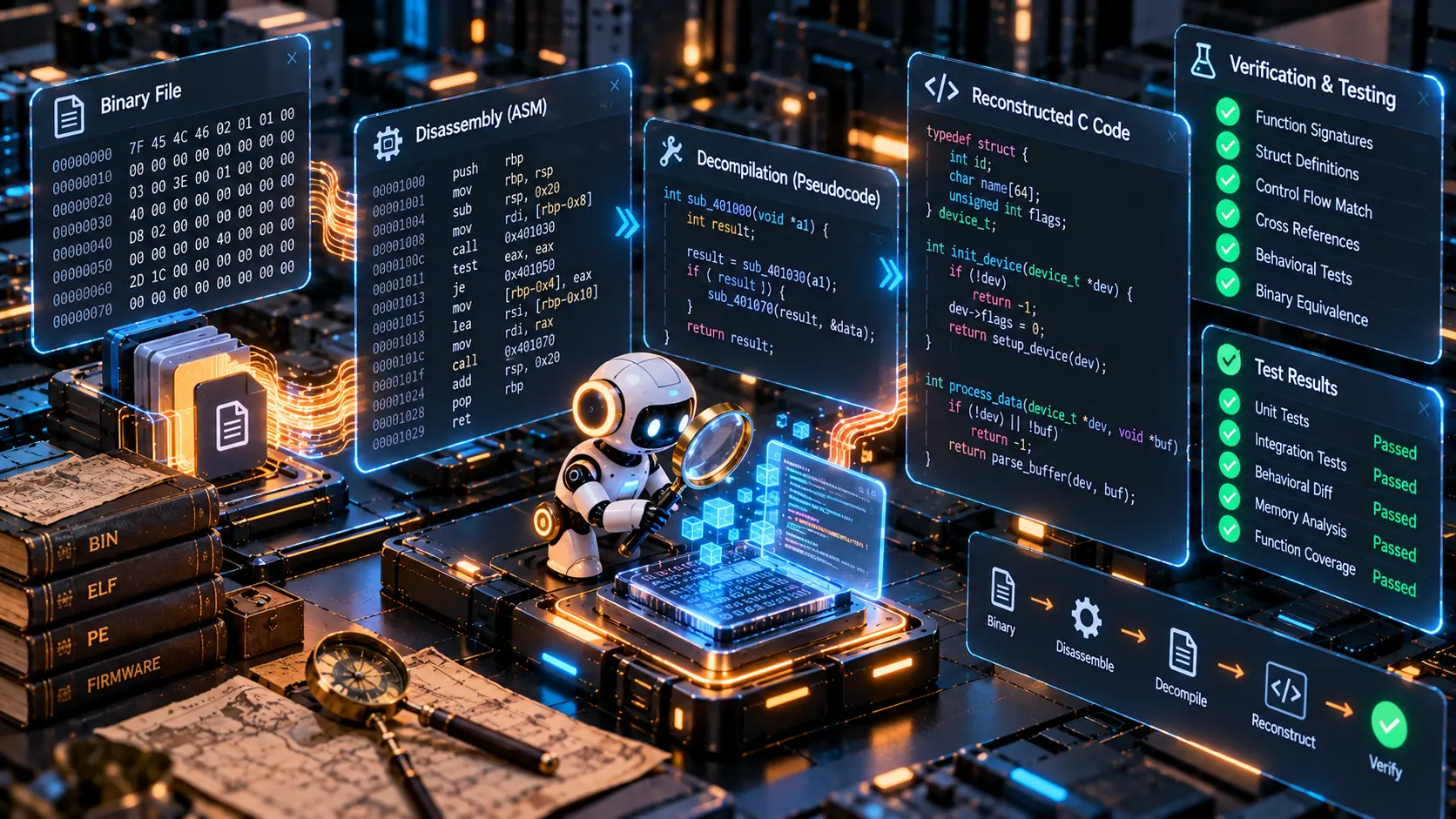
Binary reverse engineering and software archaeology historically represented one of the most intellectually demanding domains in computer science. Deconstructing compiled machine code back into readable, verifiable source abstractions typically required reverse engineers to spend weeks analyzing control flow graphs (CFGs), disassembling instructions, and painstakingly reconstructing obscure struct layouts by hand.
With the rapid development of frontier reasoning models like Claude Opus 5.5, a fundamental paradigm shift is transforming decompilation: developers have recently demonstrated the capability to generate complete playable desktop ports and clean, compilable C source code directly from legacy binary ROMs in days rather than years of manual reverse engineering.
Modern reasoning models do not merely translate assembly mnemonics into C syntax. They infer underlying high-level architectural design patterns, resolve disjoint pointer offsets, and reconstruct domain-specific data structures with human-grade naming fidelity.
1. The 3-Stage AI-Assisted Decompilation Workflow
A resilient decompilation pipeline pairs traditional static decompilers with generative reasoning models:
- Stage 1: Disassembly & Pseudocode Generation: Deconstruct the binary image utilizing Ghidra, IDA Pro, or Binary Ninja to export raw decompiled C pseudocode.
- Stage 2: Semantic Data Structure Reconstruction: Feed raw pseudocode blocks into frontier reasoning engines with targeted prompts to infer struct definitions, descriptive variable names, and logical control loops based on pointer offsets.
- Stage 3: Cross-Validation Differential Testing: Construct automated test harnesses comparing the input/output state between the original compiled binary and the freshly synthesized high-level C implementation.
2. High-Impact Enterprise Applications
Beyond video game preservation, automated semantic decompilation yields immediate industrial utility:
- Legacy Mission-Critical Software Archeology: Modernizing proprietary industrial or financial binaries whose original source code was misplaced during corporate acquisitions.
- Proprietary Protocol Reverse Engineering: Deconstructing internal network serialization logic in connected IoT devices to craft modern integration APIs.
- Firmware Security Auditing: Rapidly auditing third-party binary drivers for hidden backdoors, buffer overflow primitives, or unpatched vulnerabilities.
Read next: Integrating gstack with Claude Code: Complete Installation and Optimization Guide
Conclusion
Leveraging frontier LLMs for binary reverse engineering converts an arduous manual craft into a semi-autonomous engineering pipeline, breathing new life into legacy systems and securing digital infrastructure at scale.
Chưa có bình luận nào. Hãy là người đầu tiên chia sẻ góc nhìn!